
Willis Carrier
Inventor of Air Conditioning
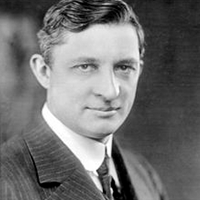
If someone made a list of everyday inventions that Americans just couldn't live without, Willis Carrier's invention might be at the top. Without Carrier's invention, movie theaters, sports arenas and working environments would be a lot less comfortable, and how could anyone sleep during those hot summer night? In case you haven't guessed, Carrier is the inventor of air conditioning.
Inventor Willis Carrier was an engineer from the east coast (not the deep south as one might expect), who started out working for a heating company. In 1902, Carrier was given the task of decreasing the humidity in a printing shop where the intense heat was causing the inks to run and bleed.
While attempts to create cooling systems had been attempted many times before, none were very successful. But Carrier managed to solve the problem, inventing a mechanical humidity controller that passed air through a filter, then over coils containing a coolant (the same basic design used in air conditioners today).
Word soon spread about Willis Carrier's invention and the number of commercial clients interested in the technology grew steadily. Carrier continued to improve his invention and, in 1915, he founded the Carrier Engineering Corporation (still a major producer of cooling equipment).
Increasingly, air conditioning gained in popularity – making its way from factories into theaters, department stores and other businesses. By the end of World War II, air conditioners had even made their way into many American homes.
Frequently Asked Questions About Willis Carrier
Who was Willis Carrier?
Willis Carrier was an American engineer and inventor who is best known for creating the modern air conditioning system. His work fundamentally changed indoor environments in homes, offices, theaters, and factories.
What did Willis Carrier invent?
He developed the first practical electrical air conditioning unit that could control both temperature and humidity. This invention made buildings more comfortable and helped improve industrial processes that required precise climate conditions.
Why was Willis Carrier’s invention important?
Before his system, people had few ways to cool indoor spaces or manage humidity. His design made it possible to improve comfort in hot weather, protect goods from heat damage, and control conditions needed for manufacturing and printing.
When did Carrier create his first air conditioner?
Willis Carrier developed his first effective air conditioning system in the early 1900s as a solution to humidity problems in a printing plant. The unit controlled both moisture and temperature, which was essential for consistent ink behavior.
How did his invention change everyday life?
Carrier’s air conditioning made hot places more livable and productive. It opened the door to modern cooling in homes, workplaces, schools, and entertainment venues. In hot climates, it reshaped architecture and city life.
Was Carrier’s invention used right away?
Initially, the early systems were large and expensive, used mainly in industrial settings like factories and theaters. Over time, as technology advanced and cost came down, air conditioning became common in homes and vehicles.
Did Willis Carrier start a company?
Yes. He co-founded a company that later became known as Carrier Global Corporation, which continues to be a major manufacturer of air conditioning and climate control systems worldwide.
What fields benefit from Carrier’s work?
His innovations benefited many areas, including manufacturing, medicine, computing, food preservation, and everyday comfort. Controlling climate and humidity is crucial in industries that rely on consistent conditions.
How did his invention influence global development?
Air conditioning helped make hot regions more habitable and productive. It contributed to economic growth in places once considered extremely challenging for year-round activity. Carrier’s work is credited with enabling long–term expansion of many sectors.
Are modern air conditioners based on Carrier’s original design?
Today’s systems are more advanced and efficient, but they build on the core principle Carrier developed: controlling temperature and humidity through engineered airflow and refrigeration cycles.
How can I learn more about Willis Carrier and air conditioning history?
There are books, museum exhibits, technical histories, and documentaries that explore the invention of air conditioning, the physics behind it, and how it spread from factories to everyday use around the world.
For more information on Willis Carrier and the invention of air conditioning, please visit:
Time 100: Builders & Titans
Who Made America? Innovators: Willis Carrier